- Hybrid strategy: Combine SEO for long-term compound growth with PPC for immediate conversions and testing.
- AI and BOFU focus: Prioritize E-E-A-T and bottom-of-funnel content to capture AI citations and high-intent traffic in 2026.
- Data-driven integration: Use PPC to validate keywords, share insights with SEO, and remarket organic visitors for higher ROI.
Think of SEO vs. PPC as two trails on the same mountain: One is a steady climb that builds endurance and offers panoramic views (SEO), while the other is a quick lift to the summit for instant gratification (PPC). In 2026, with AI reshaping the digital terrain, choosing—or better yet, combining—them isn’t just smart; it’s essential for sustainable business growth.
This guide breaks down the differences, pros, cons, and trends to help you decide. Whether you’re launching a new product or fortifying your online presence, we’ll provide a practical roadmap. And if you’re ready to optimize for both, Wrangler AI can handle the heavy lifting—our AI-driven tools and expert strategies turn traffic into revenue.
Why SEO vs. PPC Matters More in 2026 Than Ever Before
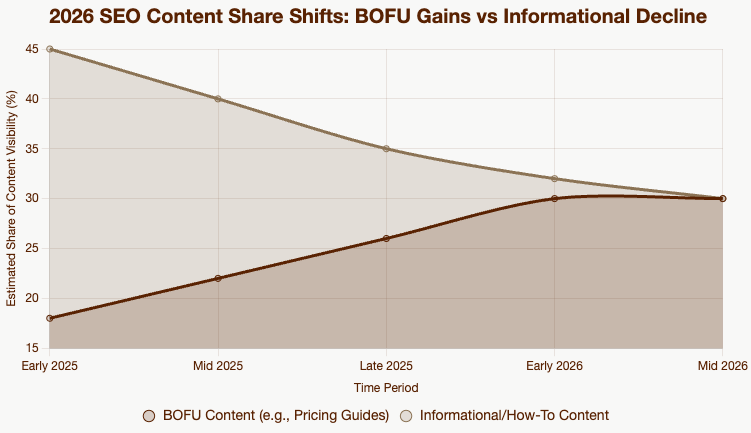
The digital marketing landscape in 2026 is dominated by AI. Tools like AI Overviews in search engines are compressing SERPs, reducing clicks on informational content by favoring summarized answers. Bottom-of-funnel topics, such as “pricing guides” and “product comparisons,” are seeing gains—up 12 and 2 percentage points in share, respectively—while how-to guides decline. This shift means brands cited in AI summaries capture more total clicks, emphasizing the need for E-E-A-T (Experience, Expertise, Authoritativeness, Trustworthiness) in content.
PPC remains resilient for transactional and local queries, where AI interferes less, allowing for immediate conversions. But relying on one strategy alone is risky—volatility from algorithm updates or ad costs can derail progress. A hybrid approach, where PPC tests high-intent keywords for SEO investment, offers the best defense. For sustainable growth, think long-term: SEO builds equity that compounds, reducing dependency on paid ads over time.
What Is SEO? The Foundation of Organic Growth
SEO (Search Engine Optimization) is the art and science of making your website irresistible to search engines like Google. It’s not about keyword stuffing anymore—it’s about creating relevant, high-quality content, optimizing user experience (UX), and demonstrating E-E-A-T to rank higher in unpaid results.
Core elements include:
- On-Page SEO: Optimizing titles, meta descriptions, headings, and content for target keywords like “SEO vs PPC 2026.”
- Off-Page SEO: Building backlinks and authority through guest posts and partnerships.
- Technical SEO: Ensuring fast load times, mobile-friendliness, and structured data for AI visibility.
- Content SEO: Focusing on BOFU topics to capture rising demand in 2026.
SEO is like planting a orchard—it takes time (3-6 months or more) to bear fruit, but once it does, the harvest is ongoing and cost-free.
What Is PPC? The Accelerator for Immediate Results
PPC (Pay-Per-Click) lets you buy visibility through ads on platforms like Google Ads or social media. You bid in auctions based on keywords, with factors like Quality Score and ad relevance determining placement. Pay only when someone clicks—perfect for time-sensitive campaigns.
Key components:
- Targeting: Demographics, locations, behaviors, and retargeting to warm leads.
- Ad Formats: Search ads, display, video, and shopping.
- Budget Control: Set daily limits and adjust in real-time.
- Analytics: Track ROI with metrics like CPC (Cost Per Click) and conversion rates.
PPC is your fast horse for quick rides—ideal for promotions or testing markets—but it stops when the budget does.
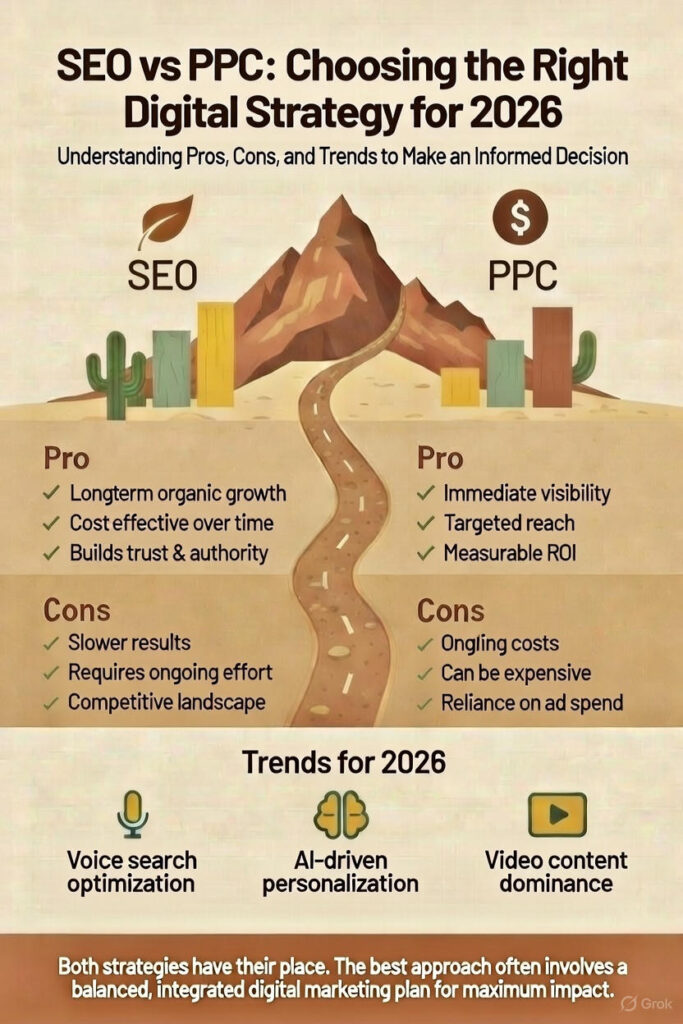
SEO vs. PPC: Pros and Cons Breakdown
To choose wisely, weigh the strengths and weaknesses. Here’s a head-to-head:
Pros and Cons of SEO
Pros:
- Long-term sustainability: Traffic persists without ongoing costs, compounding over time.
- Builds trust and authority: Organic rankings signal credibility to users.
- Cost-effective ROI: Free clicks after initial investment, especially for BOFU content in 2026.
- Broader reach: Attracts users across the funnel, from awareness to purchase.
- AI advantages: Strong E-E-A-T boosts citations in summaries for more clicks.
Cons:
- Slow results: Months to see rankings climb.
- Algorithm risks: Updates can drop visibility.
- No guarantees: Competition and AI shifts add uncertainty.
- Resource-intensive: Requires continuous effort in content and optimization.
Pros and Cons of PPC
Pros:
- Instant visibility: Launch ads and see traffic the same day.
- Precise control: Target specific audiences and measure everything.
- Flexible scaling: Adjust budgets for seasons or promotions.
- Quick testing: Validate keywords and offers before SEO commitment.
- Transactional resilience: Less impacted by AI on high-intent queries.
Cons:
- Ongoing costs: CPC can soar in competitive niches.
- Short-term: Stops when funding ends.
- Ad fatigue: Users may ignore repetitive ads.
- Expertise needed: Bidding and optimization require skills.
- Lower trust: Paid ads can seem less authentic than organic.
SEO vs. PPC Comparison Table
| Aspect | SEO | PPC |
|---|---|---|
| Cost | Upfront investment in time/content; free ongoing traffic | Pay per click; scalable but accumulative |
| Time to Results | 3-12 months or more | Immediate |
| Visibility | Organic, below ads; AI-dependent | Top of SERPs; controlled placement |
| Targeting | Broad, intent-based | Hyper-precise (demo, geo, behavior) |
| Longevity | Lasting, compounding | Temporary, budget-dependent |
| ROI Measurement | Complex (attribution models) | Direct (conversions, CPC) |
| 2026 AI Impact | Favors BOFU/E-E-A-T for citations | Strong on transactional/local queries |
This table highlights why hybrids win: Use PPC for speed, SEO for endurance.
When to Prioritize SEO vs. PPC in 2026
- Choose SEO if: You want long-term growth, have a limited budget, or aim to build authority in niches. Ideal for content-heavy sites focusing on trends like proprietary research.
- Choose PPC if: You need fast leads, are promoting offers, or testing markets. Great for high-value services or seasonal spikes.
- Go Hybrid for: Most businesses. PPC informs SEO (e.g., high-converting keywords), while SEO reduces PPC spend over time.
In competitive industries, start with PPC to gain traction, then layer in SEO for sustainability.
Integrating SEO and PPC for Maximum Impact
Don’t pit them against each other—combine for synergy:
- Keyword Testing: Use PPC to validate terms before SEO investment.
- Remarketing: Target organic visitors with PPC ads to boost conversions.
- Content Promotion: PPC amplifies new SEO content.
- Data Sharing: PPC insights refine SEO targeting.
- Competitive Defense: Bid on your brand terms to own SERPs.
Case in point: Brands like Zip saw 213% traffic value growth from integrated efforts. At Wrangler AI, our hybrid framework delivers this seamlessly—let us architect your strategy.
2026 Trends: AI, BOFU Focus, and Hybrid Dominance
AI is the game-changer: Expect more zero-click searches, but opportunities in BOFU where traditional patterns hold. Trends include:
- Rising engagement on trend reports and comparisons.
- PPC resilience in local/transactional spaces.
- SEO’s shift to durable assets like pricing content.
For ROI, measure beyond traffic: Focus on conversions, lifetime value, and AI citations.
SEO vs. PPC in 2026 is an iterative sport—done right, it compounds. Done sporadically, it collapses. Ready for predictable growth? Schedule your free Wrangler AI consultation today!